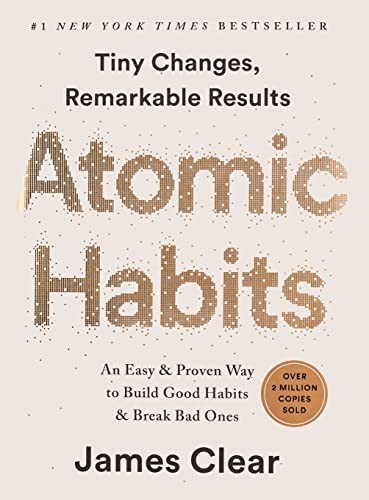
Atomic Habits
掌控习惯
A reader’s companion for turning tiny behaviors into identity, systems, and repeatable practice. Every small action is a vote, and the design of the system decides how easy the next vote becomes.
一本读者伴读图谱:把微小行为,设计成身份、系统和可重复的练习。每个小动作都是一张票,而系统设计决定下一张票有多容易投出去。
 Get the book
获取本书
Get the book
获取本书
How to use this companion
怎样把这页当伴读工具
Read it as a design manual, not a pep talk
当成设计手册,不当鸡血文
The useful question is not “How do I get more disciplined?” It is “What part of the loop is currently making the wrong behavior easy?” That shift turns the book from inspiration into diagnosis. When a habit fails, inspect cue visibility, craving, friction, reward timing, and identity evidence before blaming character.
读这本书时,最有用的问题不是“我怎么更自律”,而是“这个习惯回路里,哪一环正在让错误行为变得太容易”。这样一转,整本书就从励志变成诊断工具。习惯失败时,先看提示、渴望、阻力、反馈和身份证据,而不是立刻责怪性格。
Keep one real habit in mind
带着一个真实习惯来读
Pick one behavior while reading: writing for ten minutes, studying after school, practicing piano, lifting twice a week, or leaving the phone outside the bedroom. Every section below gives a prompt for that one behavior. The Spark works best when the reader keeps returning to the same live example.
读的时候只选一个行为:每天写十分钟、放学后复习、练琴、每周训练两次,或睡前把手机放出卧室。下面每一节都给这个行为一个练习提示。反复拿同一个例子来套,效果最好。
Why it matters
为什么重要
Clear’s framework is powerful because it moves change upstream. Instead of waiting for the moment of temptation or motivation, it changes the room, the cue, the first two minutes, and the feedback. That matters because most habits are decided before they feel like decisions. “You do not rise to the level of your goals. You fall to the level of your systems.”
克利尔这套框架厉害的地方,是把改变提前到“选择发生之前”。不是等诱惑来了才硬扛,也不是等动力出现才行动,而是先改房间、改提示、改前两分钟、改反馈。很多习惯,其实在你以为自己做决定之前,就已经被默认设置推了一把。 “你不会上升到目标的高度,只会跌回系统的水平。”
“You do not rise to the level of your goals. You fall to the level of your systems.”
“你不会上升到目标的高度,只会跌回系统的水平。”
— James Clear, Atomic Habits
—— 詹姆斯·克利尔,《掌控习惯》
Identity is the real target
真正要改的是身份
Outcomes are the surface layer
结果只是最外层
Most habit plans begin with a result: lose weight, write more, read daily, stop scrolling. Clear asks a deeper question: what kind of person does the repeated action prove you are becoming? “I want to run a marathon” is a goal. “I am becoming a runner” is an identity. The second frame lasts longer because each repetition becomes evidence.
多数习惯计划从结果开始:减重、多写、每天读书、少刷手机。克利尔往里多问一层:这个重复动作,在证明你正在成为哪一种人?“我想跑马拉松”是目标;“我正在成为跑者”是身份。后者更耐用,因为每一次重复都在补证据。
Processes are where identity gets proof
流程让身份站得住
Identity cannot be sustained by slogans alone. It needs proof you can see: a checked calendar, a two-minute practice, a book on the pillow, running shoes by the door, a phone charging outside the bedroom. These are small signals, but they make the desired self easier to believe.
身份不能只靠自我暗示维持,它需要看得见的证据:日历上的勾、两分钟练习、枕头上的书、门口的跑鞋、放在卧室外充电的手机。这些信号都很小,但会让你更容易相信新的自己。
Goals point; systems repeat
目标指方向,系统管重复
Goals are useful for choosing direction, but they do not run the day. Systems do. Two people can share the same goal and get opposite results because their cues, defaults, and friction differ. A goal says where to go. A system quietly decides whether the next step is likely.
目标负责指出要去哪里,但它不会替你过完一天。系统才会。两个人可以有同一个目标,却得到完全不同的结果,因为他们面对的提示、默认选项和阻力不同。目标说“往那边走”,系统决定“下一步容不容易走”。
Application prompt
练习提示
Write the sentence “I am becoming the kind of person who…” and finish it with an identity, not an outcome. Then choose one tiny behavior that would count as evidence. If the identity is “a reader,” the vote might be one page after brushing teeth. If it is “a reliable teammate,” the vote might be sending the update before lunch.
写下这句话:“我正在成为一个……”后面接身份,不接结果。然后选一个小到能立刻完成的行为,作为证据。如果身份是“读书的人”,证据可以是刷牙后读一页;如果身份是“靠谱的队友”,证据可以是中午前主动发一次进度。
The habit loop is the machine
习惯回路才是机器
Cue: the brain notices a possibility
提示:大脑先看见奖赏的可能
A cue is a signal that a reward may be available. It can be a time, a place, a feeling, a person, or an object in view. The phone on the desk is not neutral. The running shoes by the door are not neutral either. Both are invitations, and the habit often begins before the reader feels a choice happening.
提示是一种信号,告诉大脑“这里可能有奖赏”。它可以是时间、地点、情绪、某个人,也可以是眼前的物品。桌上的手机不是中性的,门口的跑鞋也不是。它们都在发邀请,而习惯往往在你意识到选择之前就启动了。
Craving: the cue becomes desire
渴望:提示变成想要
Craving is usually desire for a state change: relief, clarity, energy, escape, approval, or comfort. The action is only the route. This explains why the same cue means different things to different people. A buzzing phone can mean connection, interruption, anxiety, or status depending on the reward the brain predicts.
渴望通常不是想要动作本身,而是想要某种状态变化:放松、清醒、能量、逃离、被认可、被安慰。所以同一个提示,对不同人意义完全不同。手机震动可能代表连接,也可能代表打扰、焦虑或身份感。
Response: the behavior happens or fails
反应:行为发生,或发生不了
The response is the action, but it only happens if the action is possible enough. If the guitar is in the closet, practice loses. If the app is one tap away, scrolling wins. Ability, time, energy, and friction all vote before willpower enters the room.
反应就是实际行为,但它能不能发生,取决于这个动作够不够容易。吉他放在柜子里,练习就输;应用一点击开,刷屏就赢。能力、时间、精力、阻力,都在意志力上场前先投了一票。
Reward: the brain learns the pattern
奖赏:大脑学会下次还做什么
Reward closes the loop. It satisfies the craving and teaches the brain whether the action is worth repeating. A habit does not stick because it will be good someday. It sticks because the loop gives the brain a reason to repeat it now.
奖赏把回路闭合。它满足渴望,也告诉大脑:这件事值得记住,下次提示出现还可以这样做。一个习惯能留下来,不是因为“未来会对我好”,而是因为当下的回路给了大脑一个重复的理由。
Application prompt
练习提示
Map one habit in four lines: cue, craving, response, reward. For phone checking, the cue might be a project feeling stuck; the craving might be relief; the response is opening social media; the reward is a short escape. Once the loop is visible, the intervention becomes more precise. “The process of building a habit can be divided into four simple steps: cue, craving, response, and reward.”
把一个习惯拆成四行:提示、渴望、反应、奖赏。比如刷手机:提示可能是项目卡住了;渴望是想逃离挫败;反应是打开社交媒体;奖赏是短暂放松。回路看清楚后,下手点就会更准。 “建立习惯的过程可以分成四个简单步骤:提示、渴望、反应、奖赏。”
“The process of building a habit can be divided into four simple steps: cue, craving, response, and reward.”
“建立习惯的过程可以分成四个简单步骤:提示、渴望、反应、奖赏。”
— James Clear, Atomic Habits
—— 詹姆斯·克利尔,《掌控习惯》
The four laws build good habits
四大法则建立好习惯
Make it obvious
让它明显
Design the cue. Use an implementation intention: “I will do [behavior] at [time] in [place].” Use habit stacking: “After [current habit], I will [new habit].” Put the cue where the desired action can find you. The point is not to remember harder. The point is to make forgetting less likely.
先设计提示。用执行意图说清楚:“我会在什么时间、什么地点做什么。”再用习惯叠加:“在一个已有习惯之后,接上一个新习惯。”把提示放到动作能找到你的地方。重点不是更努力记住,而是让忘记更难发生。
Make it attractive
让它有吸引力
A habit gains pull when it is associated with something desirable. Temptation bundling pairs what needs to happen with what the reader already wants. Social environment matters too: behaviors become more attractive when they are normal in the group a person identifies with.
一个习惯如果和想要的东西绑在一起,就更有拉力。诱惑绑定,就是把该做的事和想做的事配对。社群也会改变吸引力:当某个行为在你认同的圈子里很正常,它自然更容易让人想做。
Make it easy
让它容易
Reduce friction until starting feels almost too small to refuse. Read one page. Put on running shoes. Open the document. Write one sentence. The tiny version is not the ambition. It is the doorway. Once the ritual of starting is reliable, the habit has a place to grow.
把阻力降到“几乎不好意思拒绝”的程度。读一页、穿上跑鞋、打开文档、写一句话。微小版本不是你的野心上限,而是入口。只要“开始”这个仪式变稳定,习惯就有地方生长。
Make it satisfying
让它及时有反馈
The brain repeats what feels rewarding. Habit tracking, immediate small wins, and visible progress give the behavior a short-term payoff while the long-term payoff is still invisible. A checkmark is not childish. It is feedback. It says the identity vote counted.
大脑会重复让它感觉有回报的事。记录、微小胜利、可见进度,能在长期结果还没出现之前,先给行为一个短期反馈。一个勾不是幼稚,而是反馈:这张身份票算数。
Why it matters
为什么重要
The four laws keep the reader from treating every habit problem as the same problem. If the cue is hidden, make it obvious. If the action feels dull, make it attractive. If it is too demanding, make it easy. If it feels unrewarded, make it satisfying. Different failures need different levers.
四大法则提醒读者:不是所有习惯问题都是同一种问题。提示藏太深,就让它明显;行为没吸引力,就让它更想做;动作太重,就让它容易;反馈太远,就让它更快有满足感。不同失败,要用不同杠杆。
The inverse laws break bad habits
反向法则拆掉坏习惯
Make it invisible
让它隐形
Bad habits thrive on visible cues. Put the phone in another room. Remove the snack from the counter. Block the site before the craving arrives. The strongest version of discipline is often not needing discipline because the cue never gets a clean shot.
坏习惯最喜欢显眼的提示。手机放到另一个房间,零食不要摆在台面上,网站在渴望出现前先屏蔽。最强的自律,常常是根本不用自律,因为提示没有机会开第一枪。
Make it unattractive
让它失去吸引力
A bad habit usually sells a benefit: relief, stimulation, ease, belonging. The inversion is to make the true cost visible at the moment of choice. Not shame, clarity. Name what the habit is buying and what it is quietly charging.
坏习惯通常会包装成某种好处:放松、刺激、方便、归属感。反向操作不是羞辱自己,而是在选择发生时看清真实代价:这个习惯买来了什么,又悄悄收走了什么。
Make it difficult
让它变困难
Friction is a guardrail. Log out. Delete the app. Keep the remote in a drawer. Add a waiting period. A behavior that requires ten extra seconds loses many automatic battles it used to win.
阻力可以当护栏。退出登录、删除应用、把遥控器收进抽屉、加一个等待时间。多出来的十秒,足够打断很多原本自动发生的行为。
Make it unsatisfying
让它不划算
Accountability changes the reward equation. A commitment partner, a public promise, or an immediate consequence makes the old loop less satisfying. The key is immediacy: distant consequences rarely beat instant rewards, so the consequence must move closer.
监督会改写奖赏账本。伙伴、公开承诺、即时后果,都会让旧回路没那么爽。关键是“近”:遥远后果很难打过即时奖励,所以后果必须离当下更近。
Application prompt
练习提示
Choose one bad habit and invert only one law today. If the cue is strongest, hide it. If the craving is strongest, write the real cost on a sticky note. If the response is too easy, add friction. If the reward is too immediate, add accountability. “In order to believe in a new identity, we have to prove it to ourselves.”
选一个坏习惯,今天只反转一条法则。如果提示最强,就把它藏起来;如果渴望最强,就把真实代价写在纸上;如果动作太容易,就加阻力;如果奖励太即时,就加一个监督机制。 “为了相信新的身份,我们必须拿出证据给自己看。”
“In order to believe in a new identity, we have to prove it to ourselves.”
“为了相信新的身份,我们必须拿出证据给自己看。”
— James Clear, Atomic Habits
—— 詹姆斯·克利尔,《掌控习惯》
Environment beats heroic discipline
环境胜过硬扛
The room is part of the habit
房间也是习惯的一部分
Clear’s environment argument is not decorative. A desk with the book already open asks for a different person than a desk with the phone unlocked beside the keyboard. The room votes before the reader does. A well-designed environment makes the desired behavior the path of least resistance.
克利尔讲环境,不是在讲摆设。一本已经打开的书,和一部解锁放在键盘旁的手机,会召唤出完全不同的自己。房间会在你之前先投票。好的环境设计,会让好行为成为阻力最小的路径。
Visibility changes probability
看得见,就更可能发生
The easiest cue is the one already in sight. Put the guitar on a stand, not in a case. Put fruit on the counter, not cookies. Put the study guide on the pillow, not buried in a backpack. These tiny placements matter because attention is a scarce resource.
最好用的提示,是已经在眼前的提示。吉他放在架子上,不要收进盒子;水果摆在台面上,不要摆饼干;复习资料放在枕头上,不要埋进书包。注意力很稀缺,所以摆放位置真的会改变概率。
Friction is not failure
阻力不是失败,是保护
Friction can protect the future self. Logging out, moving the charger, deleting the shortcut, or making the unhealthy option inconvenient are not signs of weakness. They are system design. The reader is not trying to win a willpower duel every night. The reader is trying to prevent the duel.
阻力可以保护未来的自己。退出登录、挪走充电器、删掉快捷入口、让不健康选择变麻烦,都不是软弱,而是系统设计。你不是要每天晚上打一场意志力决斗,你是要尽量避免那场决斗发生。
Why it matters
为什么重要
Environment design is compassionate because it assumes humans are shaped by defaults. That does not remove responsibility. It locates responsibility earlier, at the design moment, where a small change can make the later decision easier.
环境设计带着一点温柔:它承认人会被默认选项塑造。这不是逃避责任,而是把责任放到更早、更有用的位置。早点改设计,晚点做选择时就轻松一点。
Starting small is a strategy
从小开始,是策略
Two minutes protects the start
两分钟保护的是“开始”
The two-minute rule sounds almost too small: read one page, write one sentence, put on running shoes. That is exactly why it works. The first battle is not peak performance. The first battle is showing up often enough that the identity has evidence.
两分钟法则听起来小得离谱:读一页、写一句、穿上跑鞋。正因为小,它才有用。第一场仗不是做到巅峰表现,而是出现得足够多,让身份开始有证据。
A tiny habit is a gateway, not a ceiling
微小习惯是入口,不是天花板
The tiny version is not the final version. It is the ritualized entrance. A person who reliably opens the notebook is much closer to writing than a person who keeps planning a perfect writing system. Starting builds the runway that effort can use later.
微小版本不是最终版本,而是进入仪式。能稳定打开笔记本的人,比一直规划完美写作系统的人,更接近真正写作。开始这条跑道铺好了,后面的努力才有地方加速。
Smaller reduces negotiation
越小,越少讨价还价
Big habits invite bargaining: not enough time, not enough energy, not the right mood. A two-minute version leaves fewer places for excuses to hide. On a bad day, it is still doable. On a good day, it often becomes more.
大习惯会引来很多谈判:没时间、没精神、状态不对。两分钟版本让借口无处藏身。坏日子也能做;好日子里,它常常会自然变多。
Application prompt
练习提示
Shrink your target until it sounds almost silly. “Study chemistry” becomes “open the notes and solve one problem.” “Get fit” becomes “put on shoes and walk outside.” “Learn robotics” becomes “connect one sensor and write one test.” The tiny version should be honest, visible, and repeatable.
把目标缩到小得有点好笑。“复习化学”变成“打开笔记,做一道题”;“变健康”变成“穿鞋出门走一圈”;“学机器人”变成“接一个传感器,写一个测试”。微小版本必须真实、可见、可重复。
Tracking makes identity visible
记录让身份看得见
Measurement turns action into evidence
记录把行动变成证据
A habit tracker converts an invisible vote into a visible mark. The mark is not the point, but it helps the brain see continuity. One checkmark is modest. A line of checkmarks becomes evidence. Evidence is what identity feeds on.
习惯记录把看不见的身份投票变成一个看得见的标记。标记本身不是目的,但它让大脑看见连续性。一个勾很小,一串勾就成了证据。身份靠证据喂养。
Track the behavior, not your self-worth
记录行为,不审判自己
Tracking can become punitive if the reader treats the streak as a moral score. Clear’s stronger use is informational: did the system produce the behavior today? If yes, preserve it. If no, inspect the loop. The tracker is a dashboard, not a courtroom.
如果把连续记录当成道德分数,记录会变得很惩罚。更好的用法是把它当信息:今天系统有没有产出这个行为?有,就保留;没有,就检查回路。记录表是仪表盘,不是法庭。
Immediate feedback bridges delayed rewards
即时反馈,撑过长期回报的空窗
Many good habits pay off late. Fitness, skill, savings, reading, and learning often improve quietly before results show. Tracking gives the brain a near-term signal while the long-term reward is still invisible. That short feedback loop helps the system survive the flat part of the curve.
很多好习惯的回报来得很晚:体能、技能、储蓄、阅读、学习,都常常先安静地变好,结果才慢慢显现。记录给大脑一个近处信号,让系统撑过曲线还没抬头的那段时间。
Application prompt
练习提示
Track only one behavior for seven days. Make the mark immediately after the action. If you miss, write why in three words or fewer: “too late,” “cue hidden,” “too hard.” The note is not confession. It is design data.
只追踪一个行为,追踪七天。动作一完成,立刻做标记。如果漏了,用不超过三个词写原因:太晚、提示不见、太难。那不是忏悔,而是设计数据。
Recovery is part of the system
恢复也是系统的一部分
Missing once is data, not doom
漏一次是信息,不是结局
Real systems expect interruption: travel, illness, deadlines, bad sleep, children, chaos. The miss is not the failure. The failure is letting the miss rewrite the identity. A system with no recovery rule is secretly a perfectionism trap.
真正能用的系统,会预料到出差、生病、赶工、睡不好、孩子和各种混乱。漏做一次不是失败,让这次漏做改写身份才危险。没有恢复规则的系统,本质上是完美主义陷阱。
Never miss twice
不要连续漏两次
“Never miss twice” is a tiny rule with a big job. One missed workout says life happened. Two missed workouts can become “I guess I am not a workout person.” The second day is where identity is defended.
“不要连续漏两次”是一个很小、很有力的规则。漏一次训练,说明生活插了一脚;连续漏两次,就可能变成“我果然不是会训练的人”。第二天,是身份防线。
Trajectory matters more than mood
看轨迹,不看一时心情
Current results are noisy. Trajectory is more honest. If the system is making the good behavior easier and the bad behavior harder, compounding is already underway even before the scoreboard moves. Early habit change often feels unrewarded because the curve is still flat.
眼前结果很吵,轨迹更诚实。如果系统正在让好行为更容易、坏行为更困难,复利其实已经开始,只是分数牌还没动。习惯改变的早期常常没有奖励感,因为曲线还在低处。
Application prompt
练习提示
Write a recovery rule before you need it. “If I miss a day, the next version is two minutes.” “If travel breaks the routine, I do the hotel-room version.” “If I miss practice, I send one message to my accountability partner.” Recovery should be pre-decided, not improvised under guilt.
在需要恢复之前,先写好恢复规则。“如果我漏一天,下一次只做两分钟版本。”“如果出差打断节奏,我做酒店房间版本。”“如果漏练,我给监督伙伴发一条消息。”恢复最好预先决定,不要在内疚里临时发挥。
Compounding is a direction, not a guarantee
复利是方向,不是保证书
1% is a metaphor with a warning label
1%是一个隐喻,也需要警示标签
Clear uses the 1% idea to make compounding intuitive. A tiny improvement can be invisible today and meaningful later. But the Spark should not pretend life is a spreadsheet. The point is directional: repeated small choices change trajectory, especially when the system keeps making those choices easier.
克利尔用1%的概念,让复利变得容易理解。微小进步今天可能看不见,之后却可能很有意义。但生活不是电子表格。这一节的重点是方向:反复的小选择会改变轨迹,尤其当系统一直让好选择更容易发生时。
Plateaus are part of the curve
平台期是曲线的一部分
Early work often looks wasted because the result has not crossed the visible threshold. Clear’s ice-cube image captures the feeling: the work from 25 to 31 degrees matters even though nothing appears to melt. Many readers quit inside that delay.
早期努力常常像白费,因为结果还没有越过可见阈值。克利尔用冰块的比喻说明这种感觉:从25度加热到31度,看起来什么都没融化,但工作并没有浪费。很多人正是在这段延迟里放弃。
Bad habits compound too
坏习惯也会复利
The compounding argument is not only optimistic. Repeated avoidance, scrolling, skipped sleep, unmanaged clutter, and ignored practice also accumulate. The same mechanism that makes good habits powerful makes bad habits costly. Direction matters before magnitude becomes obvious.
复利不是只讲好消息。反复逃避、刷屏、熬夜、放任杂乱、忽视练习,也会累积。让好习惯强大的机制,同样会让坏习惯变贵。在规模变明显之前,方向已经很重要。
Why it matters
为什么重要
This frame helps the reader respect tiny actions without worshiping them. One action will not transform a life. A system that keeps selecting slightly better actions changes the odds. That is a more honest and more useful promise.
这个框架能让读者尊重小行动,但不迷信小行动。一次行动不会改写人生;一个持续让你选择更好一点的系统,才会改变概率。这是更诚实、也更能用的承诺。
The one-action handoff
今天只交给你一个动作
Pick one behavior
只选一个行为
Choose one tiny behavior for tomorrow. Not the whole life overhaul. One behavior. It should be small enough to do on a bad day and meaningful enough to count as a vote for the identity you named.
明天只选一个小行为。不是整个人生大改造。一个就够。它要小到坏日子也能做,同时又能真实地给你想成为的身份投一票。
Attach it to a cue
接到一个已有提示后面
Use the sentence: “After I [current habit], I will [new tiny behavior].” After brushing teeth, read one page. After starting coffee, open the notebook. After putting the backpack down, solve one problem. Existing routines make reliable hooks.
用这个句式:“在我做完【已有习惯】之后,我会做【新的小动作】。”刷牙后读一页;开咖啡机后打开笔记本;放下书包后做一道题。已有日常,是最可靠的钩子。
Make the cue visible
把提示放到眼前
Place the object where the habit begins. The book goes on the pillow. The shoes go by the door. The guitar goes on the stand. The study card goes on the desk. If the cue is invisible, the habit is relying on memory.
把物品放在习惯开始的地方。书放枕头上,鞋放门口,吉他放架子上,复习卡放桌面上。如果提示看不见,这个习惯就在依赖记忆。
Mark one win
标记一次胜利
After the action, make one mark. The mark is small, but it closes the loop with satisfaction. Tomorrow, repeat. If you miss, use the recovery rule. The beginning is not dramatic. It is one well-designed vote. You do not need a new personality to change a habit. You need one small behavior designed so well that your future self can repeat it.
动作完成后,做一个标记。这个标记很小,但它用满足感闭合了回路。明天重复。如果漏了,就用恢复规则。开始不需要戏剧性,它只需要一张设计好的票。 改变习惯不必先换一个人格。先设计一个小到能重复的动作,让未来的自己更容易继续。
Carry this forward
把这一句带走
You do not need a new personality to change a habit. You need one small behavior designed so well that your future self can repeat it.
改变习惯不必先换一个人格。先设计一个小到能重复的动作,让未来的自己更容易继续。