12 Rules for Life
人生十二法则
Life is suffering. Stand up anyway. Clean your room, tell the truth, and pick up responsibility that nobody else wants — because meaning lives on the border between order and chaos, and it's the only thing that makes the suffering bearable. Jordan Peterson's 2018 cultural phenomenon, laid out rule by rule.
活着就是受苦——明知如此,依然站起来。先把自己的房间收拾干净,再说真话,然后把没人愿意扛的担子扛起来——因为意义就长在秩序与混沌的那条边界线上,而只有它,才能让"受苦"这件事勉强撑得下去。乔丹·彼得森2018年那本引爆文化的书,逐条讲清楚,每一个关键论断都附上可查的出处。
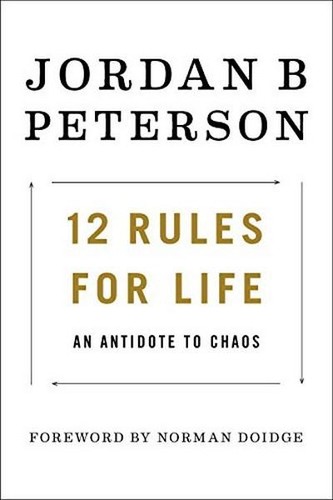 Get the book
获取本书
Get the book
获取本书
The Book — How a Quora Answer Became a Phenomenon
这本书 —— 一条Quora答复,如何引爆全球
Where it came from, who wrote it, and how a list of 42 rules typed by a little-known clinical psychologist in 2012 became one of the bestselling non-fiction books of the 21st century.
它从哪儿来、谁写的,以及一位2012年几乎无名的临床心理学家随手打出的42条"人生建议",如何变成了这个世纪全球卖出最多的非虚构类书籍之一。
The Quora Post That Started It All
一条被编辑看中的网络问答
In 2012, Jordan Peterson — then a respected but little-known clinical psychologist and professor at the University of Toronto — answered a question on Quora: What are the most valuable things everyone should know? His answer ran to 42 numbered rules. It went quietly viral within Quora's user base. Craig Pyette, an editor at Random House Canada, saw it, reached out, and signed Peterson to develop the list into a book. Peterson trimmed 42 down to 12 and spent the next five years writing around each rule — not as a listicle, but as a long, looping essay anchored by a title rule at the top.
2012年,乔丹·彼得森——当时他只是多伦多大学里一位受同行尊重、但公众几乎不认识的临床心理学家——在Quora上回答了一个问题:每个人都应该知道的最有价值的事是什么?他一口气写了42条。这篇回答在Quora内部悄悄火了。加拿大兰登书屋的编辑Craig Pyette看到后主动找上门,和彼得森签下一本书。他把42条砍到12条,之后用了整整五年时间为每一条写一整章——不是列表体的小贴士,而是长达二三十页、层层展开又绕回原点的长篇散论。
Who Jordan Peterson Is
彼得森其人
Peterson was born in Edmonton, Alberta in 1962 and grew up in the small northern Alberta town of Fairview. He took two undergraduate degrees at the University of Alberta (political science, then psychology), earned his Ph.D. in clinical psychology at McGill in 1991, and spent five years as an assistant professor at Harvard (1993–1998) before moving to the University of Toronto, where he taught until his 2021 retirement to Professor Emeritus status. His first book, Maps of Meaning: The Architecture of Belief (Routledge, 1999), took him roughly thirteen years and laid out the philosophical scaffolding — Jung, Piaget, Eliade, Nietzsche, Dostoevsky, Solzhenitsyn — that the later rule-books would hang from.
彼得森1962年生于加拿大艾伯塔省埃德蒙顿,在北部小镇费尔维尤长大。他在艾伯塔大学读了两个本科学位(政治学、心理学),1991年在麦吉尔大学拿到临床心理学博士,之后在哈佛大学任心理学助理教授五年(1993–1998),然后转到多伦多大学,一直教到2021年以荣誉退休教授身份退下来。他的第一本书《意义的地图:信仰的建筑》(Routledge,1999)写了大约十三年——这本书搭起了他日后所有作品的哲学骨架:荣格、皮亚杰、埃利亚德、尼采、陀思妥耶夫斯基、索尔仁尼琴。
Bill C-16 and the Making of a Controversy
C-16法案:书出版之前,他已是争议人物
12 Rules didn't come out of nowhere. In September 2016, Peterson released a series of YouTube videos opposing Canadian Bill C-16, which added "gender identity or expression" to the Canadian Human Rights Act and the hate-propaganda provisions of the Criminal Code (the bill received royal assent in June 2017). Peterson argued the law would amount to compelled speech — that refusing to use a person's preferred pronouns could, in his reading, become a criminal offense. Legal scholars, including University of Toronto law professor Brenda Cossman and the Canadian Bar Association, disputed that reading publicly. The videos went viral. By early 2018, when the book was published, Peterson already had the audience and the controversy that would turn 12 Rules into a phenomenon.
《十二法则》不是从天而降的。2016年9月,彼得森在YouTube上连发一系列视频,反对加拿大的C-16号法案——该法把"性别认同或性别表达"写入了《加拿大人权法》和《刑法》的仇恨宣传条款(2017年6月正式生效)。彼得森的论点是:这部法律相当于"强制言论"——拒绝使用某人偏好的代词可能被定为犯罪。多伦多大学法学院教授Brenda Cossman和加拿大律师协会等法律界人士公开反驳了他的解读。视频迅速走红。等到2018年初这本书面世,彼得森身上既有了现成的读者群,也有了现成的争议——这就是它一出就爆的底层原因。
"When you have something to say, silence is a lie."
「当你心里明明有话,沉默就是一种谎言。」
— Jordan B. Peterson, jordanbpeterson.com
—— 乔丹·彼得森,官方网站
"So What You're Saying Is…" — The Interview That Made the Book
「所以你的意思是……」——那场让书大卖的采访
The book dropped on January 16, 2018 in the UK and January 23 in Canada and the US. The same day as the UK release, Peterson sat for a 29-minute Channel 4 News interview with Cathy Newman — who repeatedly paraphrased his positions with variations of the construction "so what you're saying is…". The interview became a meme, crossed 49 million YouTube views, and functioned as a viral promotional tool the publisher could never have bought. 12 Rules hit #1 on Amazon and the Wall Street Journal bestseller list, #1 in Canada, and top of the UK Sunday Times list. (Note: it did not chart on the New York Times list, reportedly because the book was published by a Canadian house.) Peterson went on a world tour reaching over 125 cities and 250,000 ticketed attendees by mid-2018.
这本书2018年1月16日在英国上市、1月23日在加拿大和美国上市。就在英国发行的当天,彼得森接受了英国第四频道新闻主播凯茜·纽曼长达29分钟的访谈——期间她反复用"所以你的意思是……"这个句式去复述他的观点。这段采访立刻变成一个梗,在YouTube上播放了四千九百万次,成了出版社花多少钱都买不到的病毒式宣传。《十二法则》随即登上亚马逊和《华尔街日报》畅销榜第一、加拿大第一、英国《星期日泰晤士报》第一。(它没有上《纽约时报》榜——据出版方说,因为本书是由加拿大出版社发行的。)彼得森随后开启全球巡讲——到2018年中已经走过125座以上的城市,售票观众超过25万人。
2019–2020: The Years He Nearly Didn't Come Back From
2019–2020:那段他几乎失控的日子
In the spring of 2019, Peterson's wife Tammy was diagnosed with kidney cancer. Peterson, who had been prescribed clonazepam for anxiety, had his dose increased and developed a severe benzodiazepine dependence. In January 2020, he traveled with his daughter Mikhaila to Moscow for a treatment unavailable in North America; he was placed in a medically induced coma for eight days and was also diagnosed with double pneumonia. He continued recovery in Belgrade, Serbia, and did not return to public life in full until late 2020. The follow-up book, Beyond Order: 12 More Rules for Life, came out March 2, 2021.
2019年春,彼得森的妻子塔米被诊断出肾癌。彼得森当时正在服用苯二氮䓬类抗焦虑药——医生加大了剂量,他因此陷入严重的药物依赖。2020年1月,他和女儿米凯拉飞往莫斯科接受北美没有的那种治疗方案;他被医学诱导昏迷了八天,到院时还被查出双肺肺炎。之后他在塞尔维亚的贝尔格莱德继续康复,直到2020年底才全面回归公众视野。续作《人生秩序之外:再加十二条》(Beyond Order)于2021年3月2日问世。
The 12 Rules — One-Line Essence of Each
十二法则 —— 每条的要义与标志概念
The rules are not listicle bullet points. Each chapter is a long meditation — 20 to 40 pages — that starts with an aphoristic rule, runs through evolutionary biology, ancient myth, clinical psychology, and personal anecdote, and loops back to the rule. These are one-line essences, with the concept or anecdote Peterson uses to anchor each one.
这十二条不是"要点列表"。每一章都是一篇二十多页的散论——从一句格言式的法则开篇,一路穿过演化生物学、神话、临床心理学和个人回忆,再绕回来。下面是每条法则的一句话要义,以及彼得森在书里用来支撑它的那个核心概念或故事。
Stand up straight with your shoulders back.
站直了,肩膀打开。
Posture is neurochemistry. How you hold yourself is read by others and by yourself, and feeds back into your sense of status and possibility. Signature concept: Lobster serotonin hierarchies — Peterson argues lobsters and humans share an ancient serotonin-regulated status system, evidence that hierarchy predates human politics. Biologists dispute the extrapolation.
姿势就是神经化学。你怎么站着,别人读得到、自己也读得到——这些信号会反过来影响你感觉到的地位和可能性。标志概念:龙虾的血清素等级制——彼得森认为,龙虾和人类共享一套古老的血清素系统,用来标记社会地位。生物学家对这个推论并不买账。
Treat yourself like someone you are responsible for helping.
像对待一个你有责任帮助的人那样对待自己。
You reliably give medicine to your pet. You skip your own prescription. This is not virtue — it's self-contempt. Signature observation: People fill prescriptions for their dogs at much higher rates than for themselves.
你会一丝不苟地给宠物喂药,却不吃自己的药——这不是"谦让",是一种自我轻视。标志观察:人给狗取药的依从率,比给自己取药高得多。
Make friends with people who want the best for you.
和真正希望你好的人做朋友。
Loyalty to a self-destructive friend isn't loyalty — it's you drowning with them. Some people in your life do not want you to rise. Anchor anecdote: His hometown friend "Chris" in Fairview, Alberta — a man Peterson loved but could not save.
对一个自毁的朋友讲"义气",不是义气,是陪他一起往下沉。你身边有些人,其实并不希望你往上走。故事原型:他在艾伯塔老家费尔维尤的朋友"克里斯"——彼得森深爱这个人,却救不了他。
Compare yourself to who you were yesterday, not to who someone else is today.
和昨天的自己比,不要和今天的别人比。
The internal critic that measures you against an imaginary best-version-of-everyone-else is not useful. The only valid comparison is to your own prior self.
脑子里那个拿你去跟"别人里最优秀的那个"比的声音——它没有用。唯一值得比较的,是昨天的你自己。
Do not let your children do anything that makes you dislike them.
不要让你的孩子做出让你不喜欢他们的事。
Parents avoid discipline because conflict is unpleasant. The cost of that avoidance is a child that other adults — and eventually the child themselves — cannot stand. Signature claim: Socialization is a parental obligation, not an option.
父母回避管教,是因为冲突让人难受。但回避的代价是:养出一个让周围大人讨厌、最后连他自己都无法忍受的孩子。标志主张:教孩子如何与人相处是父母的责任,不是选择题。
Set your house in perfect order before you criticize the world.
批评世界之前,先把自己的屋子打扫干净。
Before blaming the system, clean your room. Resentment aimed outward becomes ideology, revenge, violence. Anchor anecdote: The Columbine shooters, whose diaries Peterson reads as the logical endpoint of un-examined resentment. (This drew the book's sharpest academic criticism — see Criticism section.)
怪制度之前,先把自己屋子扫干净。朝外发酵的怨气,最后会变成意识形态、复仇,甚至暴力。故事原型:哥伦拜恩枪击案的两个凶手——彼得森把他们的日记解读成"未被审视的怨气"的最终形态。(这个解读招来了本书最尖锐的学界批评。)
Pursue what is meaningful (not what is expedient).
追求有意义的东西,不要追求方便的东西。
Expedience gets you through the next five minutes at the cost of the next five years. Meaning is the compound interest. Signature frame: Christian sacrificial structure — the productive sacrifice of the present to the future.
图方便能让你熬过接下来的五分钟,代价是接下来的五年。意义,是那个慢慢复利的东西。标志框架:基督教式的"献祭"结构——用当下去换未来,这是一件有产出的牺牲。
Tell the truth — or, at least, don't lie.
说真话——至少不要撒谎。
Every lie you tell corrodes your grip on reality. You can't trust your own perceptions if you've been feeding them distortion. Signature claim: "Life is suffering — deceit makes it worse."
你说出去的每一个谎,都会腐蚀你抓住现实的能力。你一直往自己脑子里塞扭曲的东西,就再也信不过自己的感觉了。
Assume that the person you are listening to might know something you don't.
永远假设你在听的那个人,可能知道你不知道的事。
Most conversation is two people waiting to talk. Real listening is a clinical skill, and it's rarer than people think. Source concept: Carl Rogers' person-centered therapy — where the listener has to be able to summarize the other's position better than they can themselves.
绝大多数对话,其实是两个人各自在等着开口。真正的倾听是一门临床技术,比大多数人以为的要稀缺得多。思想源头:卡尔·罗杰斯的"以人为本"疗法——听的那一方要能把对方的立场总结得比对方自己还清楚。
Be precise in your speech.
把话说精确。
Vagueness is a hiding place. Naming what is actually wrong — in your marriage, your job, your body — is the hardest and most valuable work. Signature frame: Precision is the tool by which chaos is articulated into order.
含糊是一种藏身之处。把真正出问题的东西一个个说清楚——在婚姻里、在工作里、在自己身体里——这是最难、也最值得的功夫。标志框架:所谓"把事说清楚",就是把混沌一点点讲成秩序的那把工具。
Do not bother children when they are skateboarding.
孩子在玩滑板的时候,不要去打扰他。
Watching kids push the edge of competence is uncomfortable. Removing that edge — in the name of safety — produces adults who can't calibrate risk. Signature concept: A critique of what others would later call "safetyism."
看孩子把自己推到能力边缘,大人会心疼。但以"为你好"的名义把这条边缘抹掉,养出来的是一群分不清风险该怎么度量的成年人。标志概念:对后来被称作"过度安全主义"的一种早期批评。
Pet a cat when you encounter one on the street.
路上遇到一只猫,摸一下它。
Joy comes in very small units. When things are unbearable, do not refuse the small goods that remain. Anchor anecdote: His daughter Mikhaila's juvenile rheumatoid arthritis — Peterson's most personal passage in the book.
快乐的单位很小。日子糟糕到撑不下去的时候,更不要拒绝那些还留着的小小的好。故事原型:他女儿米凯拉从小患的幼年类风湿关节炎——这是全书彼得森写得最私人的一段。
Key Themes — The Shape of the Argument
核心主题 —— 贯穿全书的四根骨架
A few ideas recur across every chapter. Once you spot them, the rules stop feeling like twelve disconnected instructions and start feeling like one extended argument.
有几组想法,在每一章都反复出现。一旦你认出它们,这十二条就不再是十二条各自独立的指令,而是一篇连着一口气讲完的长论。
Theme 1: Chaos vs. Order
主题一:混沌与秩序
The book's title couplet — and the central image of all Peterson's work since Maps of Meaning (1999). Chaos is the unknown, the unexplored, the next thing that could hurt you; Order is the mapped, the familiar, the structure you can walk through without thinking. Neither one is good or evil. Too much order becomes tyranny; too much chaos becomes collapse. Meaning, in Peterson's reading, lives exactly on the border — one foot on the stable ground you know, one foot in the territory you don't.
这本书副标题里的一组对子——也是彼得森从《意义的地图》(1999)以来所有作品的核心意象。混沌是未知、是尚未走过、是下一个可能把你弄伤的东西;秩序是已经画进地图的、熟悉的、闭着眼都能走的那套结构。这两者本身不分善恶:秩序太多变成暴政,混沌太多则是崩塌。在彼得森看来,意义就长在这条边界上——一只脚站在你熟悉的土地上,另一只脚踩进你还不认识的那片领域。
Theme 2: Competence Hierarchies (Not "Dominance")
主题二:能力等级(不是"支配等级")
Peterson makes a specific distinction: the hierarchies he defends are emergent hierarchies of skill, not coercive dominance hierarchies. A chess ranking is a competence hierarchy. A mob boss's organization is a dominance one. The lobster-serotonin argument of Rule 1 is his evidence that competence hierarchies predate human civilization — and are therefore not, as critics argue, a mere artifact of capitalism or patriarchy. Biologists have disputed this extrapolation.
彼得森特意做了一个区分:他所捍卫的等级制,是基于能力自然涌现出来的等级,不是依靠强力压服的"支配等级"。国际象棋的段位是能力等级;黑帮老大的组织是支配等级。第1条里的"龙虾血清素"论证,就是他用来说明——能力等级远远早于人类文明,所以批评者说它只是"资本主义或父权制的产物",他认为站不住脚。
Theme 3: Responsibility as Meaning
主题三:担当,就是意义本身
The book's central prescription. Peterson argues that meaning is not a feeling you chase — it is the felt experience of voluntarily shouldering responsibility for something larger than yourself. The young men who flocked to him in 2017–2019 were, in his reading, responding to a culture that had told them to pursue rights and pleasure but had systematically stopped asking them to carry weight.
这本书开出的核心"处方"。彼得森说:意义不是一种你去追的情绪,而是你主动替比你大的某样东西扛起责任时产生的那种真实感受。2017–2019年涌向他的那一大批年轻男性——在他看来——是在回应一种文化:那种文化一路告诉他们要追求权利、追求愉悦,却系统性地不再要求他们挑担子了。
Theme 4: The Fall-and-Redemption Structure
主题四:"堕落—救赎"的叙事结构
Peterson reads Genesis, Exodus, and the Gospels as psychological-archetypal texts — not as historical claims, and not (primarily) as theology. The fall from Eden is the recognition of one's own vulnerability and mortality; redemption is the voluntary return to that knowledge with open eyes and a willingness to act anyway. The influences here are Jung, Nietzsche, Eliade, Dostoevsky, and above all Solzhenitsyn — all declared explicitly in Maps of Meaning and recurring in every chapter of 12 Rules.
彼得森把《创世记》《出埃及记》和福音书读作"心理—原型"文本——而不是把它们当成历史叙述,也不(主要)当成神学。伊甸园里的"堕落",是人第一次意识到自己会伤、会死;"救赎",则是睁着眼回到这份认知里,然后决定依然行动。他自己点名的几位思想源头:荣格、尼采、埃利亚德、陀思妥耶夫斯基,以及最重要的——索尔仁尼琴。这些名字贯穿每一章。
"Suffering is built into the structure of being."
「痛苦,本就是'存在'这件事的结构。」
— Jordan B. Peterson, 12 Rules for Life
—— 乔丹·彼得森,《人生十二法则》
Criticism — The Serious Objections
批评 —— 来自严肃阵地的实名批评
12 Rules for Life provoked serious, named criticism from serious venues. The best pieces aren't hit jobs — they're people with domain expertise arguing the book is wrong. Worth reading the book alongside them.
《十二法则》引来过来自严肃媒体、署名作者的严肃批评。最好的那几篇不是抹黑文,而是一些本行业的专家在论证这本书在哪里出错了——值得和原书一起读。
Pankaj Mishra — "Jordan Peterson & Fascist Mysticism"
米什拉 · 《纽约书评》2018 · "法西斯式的神秘主义"
New York Review of Books, March 2018. Mishra places Peterson in a lineage of 19th- and 20th-century reactionary mystics — Julius Evola, orientalizing strands of Jung — and argues that the "tradition" Peterson claims to channel is a recent invention that historically coincides with political crises. The rules, Mishra writes, are "right-wing pieties seductively mythologized for our current lost generations." Peterson responded with a Twitter threat ("…I'd happily slap you") that was widely reported.
《纽约书评》,2018年3月19日。米什拉把彼得森放进一个19世纪末到20世纪的反动神秘主义者谱系——朱利叶斯·埃沃拉、荣格作品里东方化的那一支——并论证:彼得森声称自己继承的那条"传统",其实是一个与政治危机时代同步出现的近世发明。米什拉写道,这十二条不过是"用神话糖衣包装、卖给这一代迷茫年轻人的右翼陈词滥调"。彼得森在推特上发帖威胁他("……我很乐意扇你一耳光"),之后被各家媒体广泛报道。
Nathan J. Robinson — "The Intellectual We Deserve"
罗宾逊 · 《Current Affairs》2018
Current Affairs, March 2018. Robinson's method is close reading. His three sharpest claims: Peterson's prose is "comically befuddled, pompous, and ignorant"; his technique is to take "obvious platitudes" and restate them "using as many words as possible" with technical language from several disciplines — so no single reader has the training to refute the whole; the result is "a kind of Rorschach test onto which countless interpretations can be projected." Robinson also accuses Peterson of the naturalistic fallacy — describing a biological tendency and implying it is therefore good.
《Current Affairs》,2018年3月。罗宾逊的方法是文本细读。他最锋利的三刀:彼得森的文风"又糊涂、又浮夸、又无知,带着喜剧效果";他的技巧是把"明明很浅显的套话"用尽量多的字、尽量多学科的术语重讲一遍——所以没有哪个读者的学术背景能同时驳倒整本书;结果是"一张罗夏墨迹图,读者可以往上投射任何自己想看到的解读。"罗宾逊还指控彼得森犯了自然主义谬误——把一个生物层面的事实,直接等同于道德上"该这样"。
Kate Manne — The Columbine Cherry-Pick
Manne · Vox 2018 · 关于"哥伦拜恩"那一段
Cornell philosopher Kate Manne's focus is Rule 6 — the passage about the Columbine killers. She argues Peterson cherry-picks a few "dignified-sounding sentences" from Eric Harris's diary and omits the bulk of it, which she characterizes as "virulently racist, misogynistic, homophobic, and ableist." Her broader claim: 12 Rules is a "fast-acting, short-term analgesic" that fuels the entitled resentment it promises to cure. In September 2018, Peterson threatened to sue Manne and Cornell University over her Vox comments.
康奈尔大学哲学家Kate Manne盯住的是第6条——那段关于哥伦拜恩凶手的文字。她论证彼得森从艾瑞克·哈里斯的日记里挑了几句"听起来体面一点"的句子,却略掉了其余大部分——而那大部分,按她的说法,是"一段极端种族主义、厌女、恐同、歧视残障者的恶毒文字"。她更大的论点是:《十二法则》是一贴见效快的短效止痛药,表面上在治那种"理直气壮的怨气",实则恰好在给它加柴添火。2018年9月,彼得森曾威胁要起诉她和康奈尔大学。
Tabatha Southey — "The Stupid Man's Smart Person"
Southey · 《麦克琳》2017 · "蠢人眼里的聪明人"
Maclean's, November 2017 (before the book was published). The essay title became a meme. Southey's argument in a line: Peterson's appeal is that he dresses up standard right-wing grievance discourse in academic vocabulary that flatters both speaker and audience.
《麦克琳》,2017年11月(书还没上市之前)。这句标题成了后来批评者的通用暗号:"乔丹·彼得森,是不是那种'蠢人眼里的聪明人'?"她一句话的论点:彼得森的吸引力在于——他把很标准的右翼牢骚话,套上一层学术词汇的外衣;这套包装既让说话的人觉得自己有知识,也让听的人觉得自己听懂了学问。
The Lobster Argument — What Biologists Actually Said
"龙虾的等级制"这个论证站不住
Peterson's Rule 1 rests on the claim that lobster serotonin hierarchies show hierarchy is an ancient, biologically-entrenched feature of life. Biologists pushed back hard. Leonor Gonçalves, neuroscientist, The Conversation (Jan 2018): arthropods have no amygdala or cortex — only ganglia — so neurochemistry-to-behavior mappings don't transfer. Vertebrate and invertebrate lineages diverged ~500 million years ago. And in humans, lower serotonin is generally correlated with aggression — the opposite of the lobster effect. Bailey Steinworth, University of Florida biology Ph.D. candidate, Washington Post (June 2018): Peterson uses one simplified framing and runs a civilization-wide argument on it. The critique is not that Peterson fabricated science — he did cite real primary literature — but that he over-extrapolates from one neurochemical finding to a political claim the data cannot support.
彼得森第1条的根基,是"龙虾的血清素等级"这个论证——他用它来说,等级制度是刻在生命底层的古老特征。生物学家们对此反驳得很直接。神经科学家Leonor Gonçalves在《The Conversation》(2018年1月)指出:节肢动物(比如龙虾)没有杏仁核,也没有大脑皮层,只有神经节;把它们的神经化学对应到人类社会行为,结构上就不成立。脊椎动物和无脊椎动物这两条演化分支,大约在五亿年前就分开了。而且在人类身上,较低的血清素水平通常与攻击性相关——恰恰和龙虾里的关系反了。批评的要害不是说彼得森编造科学——他引用的是真实的原始文献;而是说他把一个神经化学现象无限放大,用它来撑一个数据根本支撑不了的政治论点。
How to Read It — Three Entry Points
怎么读这本书 —— 三种读法,三种收获
Few books in the last decade have been more politically stained than 12 Rules for Life. Whether that staining is deserved depends a lot on how you approach it.
过去十年里,很少有哪本书像《十二法则》这样被打上这么重的政治标签。那个标签站不站得住——很大程度上取决于你怎么读它。
As a Clinical Book
把它当一本临床心理书来读
Peterson practiced as a clinical psychologist for decades. When the book is on its clinical ground — Rules 2, 4, 9, 10 — it is genuinely useful. The advice is Rogerian, CBT-adjacent, and grounded in clinical experience with real patients. A reader who takes only these chapters will pick up a better toolkit than most pop-psychology books provide.
彼得森做过几十年的临床心理医生。当这本书站在它的本行里——尤其是第2、4、9、10条——内容是真有用的。建议本身接近罗杰斯疗法,也和CBT相邻,是建立在他多年真实病人经验上的。哪怕一个读者只吸收这几章,他拿到的工具也比多数流行心理读物扎实得多。
As a Political Book
把它当一本政治文化书来读
Peterson is also making cultural-political arguments in every chapter — about hierarchy, gender, religion, and the responsibilities culture-has-stopped-asking-men-to-shoulder. Reasonable readers reach opposite conclusions on whether these arguments are (a) the strongest part of the book, or (b) where it goes off the rails. You don't have to accept his politics to use his clinical chapters, and you don't have to reject the clinical chapters to dispute his politics.
彼得森同时也在每一章里夹带政治与文化论证——关于等级、性别、宗教,以及"这个社会不再要求男人去扛的那些东西"。在这部分,两个同样理性的读者完全可以得出相反结论。你不必认同他的政治观点才能用得上他的临床章节;你也不必全盘否定临床章节才能反对他的政治观点。
As an Early-Life Operating Manual
把它当"人生早期操作手册"来读
The book's primary audience, by Peterson's own acknowledgment, is people who feel lost — and that audience has skewed young and male. Used as an entry point into self-regulation, work ethic, and taking responsibility for small things, the book has clearly done good. Read poorly — as license for grievance, as intellectual armor in arguments the reader doesn't understand — it hasn't.
按彼得森自己说的,这本书的核心读者是"感觉迷失的人"——这群人里年轻男性比例偏高。把它当作学会自律、建立工作伦理、在小事上承担责任的入门读物——这本书确实帮到了不少人。但如果读歪了——把它当成"我可以更愤怒了"的许可证,或者把它当成一件自己其实没完全搞懂、却用来压人的思想盔甲——那它就没起到好作用。
This Book Is For…
这本书写给谁
Clinical and self-help readers looking for more intellectual depth than the genre usually provides. Anyone curious about why Peterson became a cultural lightning rod in 2017–2020. Young adults structurally adrift and in need of basic self-regulatory scaffolding.
希望读的自助书比普通市场货更有思想深度的读者。想搞清楚"彼得森为什么会在2017到2020年成为舆论焦点"的人。目前生活方向感不强,缺乏基础自律结构的年轻人。
This Book Is Not For…
谁可能不适合读这本书
Readers looking for a politically neutral self-help book — this isn't one, in either direction. Anyone expecting a tidy listicle. Each rule is a 25-page essay with heavy biblical and philosophical detours. If you want "one page and done," this is the wrong shape.
想找一本"政治上完全中立的自助书"的读者——这本书不是,任何方向上都不是。以及那种希望打开就是一页页要点清单的人:这十二条每一条都是二十多页的长文,中间大量绕进圣经和哲学的支线。如果你要的是"一张纸搞定",这本书不是那个形状。
Life is suffering. Stand up anyway. Meaning lives on the border between order and chaos — and it's built one small act of responsibility at a time.
活着就是受苦——明知如此,依然站起来。意义就长在秩序与混沌的那条边界线上,是一件一件小小的担当,日积月累堆出来的。
Key References
主要参考资料
The most important sources behind this Spark's factual claims. We don't footnote every sentence — just the things a reader might want to verify themselves.
本篇最关键论断的出处一览。我们不在每一句后面都放链接,只为读者可能想自己核实的事实列明来源。
-
1
Wikipedia — 12 Rules for Life 维基百科 ——《人生十二法则》 Canonical overview, reception, world tour, sales figures. 总览、接受史、世界巡讲、销量。 en.wikipedia.org
-
2
Wikipedia — Jordan Peterson 维基百科 —— 乔丹·彼得森 Canonical biography, academic career, C-16, benzodiazepine treatment. 生平、学术经历、C-16 法案争议、2020 年的药物依赖治疗。 en.wikipedia.org
-
3
Penguin Random House — 12 Rules for Life 企鹅兰登出版社 ——《人生十二法则》 Publisher's official book page — ISBN, pages, metadata. 出版社的官方条目页——ISBN、页数、元数据。 penguinrandomhouse.com
-
4
Pankaj Mishra — "Jordan Peterson & Fascist Mysticism," NYRB (March 2018) 米什拉 ——《乔丹·彼得森与法西斯式神秘主义》,《纽约书评》(2018 年 3 月) The most influential left-intellectual critique of the book. 左翼知识界对这本书最有影响力的一篇批评。 nybooks.com
-
5
Nathan J. Robinson — "The Intellectual We Deserve," Current Affairs (March 2018) 罗宾逊 ——《我们这个时代配得上的"知识分子"》,《Current Affairs》(2018 年 3 月) Long-form close reading of Peterson's prose and method. 对彼得森文风和论证方法的深度文本细读。 currentaffairs.org
-
6
Tabatha Southey — "Is Jordan Peterson the stupid man's smart person?" Maclean's (Nov 2017) Southey ——《乔丹·彼得森是不是"蠢人眼里的聪明人"?》,《麦克琳》(2017 年 11 月) Early pre-publication profile and critique; the meme title. "蠢人眼里的聪明人"这个说法就出自这里。 macleans.ca
-
7
Channel 4 News — Cathy Newman interview with Jordan Peterson (Jan 16, 2018) 英国第四频道新闻 —— 凯茜·纽曼对彼得森的访谈(2018 年 1 月 16 日) The 29-minute interview that made the book a phenomenon — 49M YouTube views. 让这本书引爆的那场 29 分钟采访,YouTube 播放量四千九百万。 channel4.com
-
8
Quillette — Uri Harris, "A Deep Dive into Jordan Peterson's Channel 4 Interview" Quillette —— Uri Harris《彼得森第四频道访谈深度解析》 Structured analysis of the Newman interview. 对纽曼那场访谈的结构化逐段分析。 quillette.com
-
9
Leonor Gonçalves — "Psychologist Jordan Peterson says lobsters help to explain why human hierarchies exist – do they?" The Conversation (Jan 2018) Leonor Gonçalves ——《龙虾真的能解释人类等级制度吗?》,《The Conversation》(2018 年 1 月) The canonical scientific rebuttal of the lobster-serotonin argument. 神经科学家对彼得森"龙虾—血清素"论证的反驳。 theconversation.com
-
10
CBC News — "Controversial University of Toronto professor Jordan Peterson treated in Russia" CBC 新闻 ——《彼得森在俄罗斯接受苯二氮䓬类药物依赖治疗》 Verified account of the 2020 Moscow treatment and medically induced coma. 2020 年莫斯科治疗过程的一手报道。 cbc.ca
-
11
jordanbpeterson.com — Peterson's official site 彼得森官方网站 Biography, lectures, podcasts, and current writing. 个人简介、讲座、播客、最新文字作品。 jordanbpeterson.com